

Part 2: Impact on TPN Protocols and Practice
Every person that needs TPN needs it by default and without exception. To be reliant on any life sustaining therapy makes you a high-risk patient. Clinicians are being asked to make incredibly challenging decisions about who needs the very small amount of compounded (bespoke) TPN slots available and who can have Multi-chamber bags (MCB’s), also know as ‘off the shelf’ bags. I like most people on TPN have a complex medical history and multiple diagnoses that interact with one another. The impact is not limited to nutrition, weight and gut function. It is a dreadful situation all round, those without a slot who are told that Calea has stopped compounding for them are left feeling hugely let down, those with a compounded TPN slot are left feeling guilty and pained, when those without it continue to suffer.
Buiding Up and Knocking Down: The Impact on Health and Prescriptions
Starting TPN is not like being prescribed a medication. It requires a long admission of at least four weeks. It requires a lot of care and close monitoring from Consultant Gastroenterologists, specialist nurses, dieticians and pharmacists, plus the full ward staff, to tailor a bespoke prescription that works for the individual. These specialist NHS teams that support patients are the ones being left with cleaning up the mess. This, over and above all their usual work. I cannot imagine how awful it must be to see all those patients they have carefully stabilised and restored nutritional status to, suddenly and needlessly suffering. Precious weight gained is being lost. A lot of hard work – for all involved – has been undone.
Refeeding syndrome can be an issue for people whose bodies are in starvation mode.  The specialists could explain it better than me, but essentially returning to a fed state provokes a metabolic response that can cause electrolytes to crash / go haywire. It can not only make you feel awful, but in severe cases it can be very serious. I had to follow a refeeding protocol twice during this crisis, for two separate spells after over a week without TPN. So even when nutrition arrives it must be delivered carefully. With all the chaos that is occurring, this is yet another risk that this crisis provoked.
The Impact of Using Multi-Chamber (Off the Shelf) Bags
Like everyone else who administers their own TPN, I had face-to-face training. Mine took place both in hospital and at home taught by specialist nurses. The procedures involved are lengthy and the protocol must be followed carefully each time for asepsis to be maintained. Asepsis helps protect us from harmful bacteria that could otherwise enter our bloodstream and cause serious harm. I was ‘signed off’ on each procedure multiples times over before being left to attempt it alone. I also had ‘dummy runs’ before using my own line and bags.
Off the shelf bags are not just replacements sans vitamins and trace elements. As the individual elements cannot be controlled, they mean a change to the carefully calibrated prescriptions outlined above. The bags have different manufacturers, different ingredients, different infusion ports and ‘chambers’ to be broken for manual mixing of ingredients. I wasn’t taught to do any of this. Yet I was confronted it, with no one available to demonstrate in person.
These bags were arriving after a week of no TPN, in my opinion the risks of these unfamiliar bags are elevated when you are utterly exhausted, weak and concentration is poor. Previously when some of my usual bags arrived after a week of nothing, I made two mistakes and this was with bags I’ve used 100’s of times, I hadn’t realised how poor my attention had become. Added to this, I was under huge pressure to use the MCB bags, I desperately needed TPN, and going another day without because of uncertainty about safety of the bags seemed unthinkable, yet if my safety was compromised the result could be fatal. I think the combination of unfamiliar practices, exhaustion including its cognitive effects and the pressure to go ahead regardless is potentially disastrous. I had one bag where only one chamber broke and it took 15 mins to break the other, so lipids and amino acids were mixing well before the glucose. I had no idea whether this was fine or not. I had a bag with a port almost impossible to piece resulting in a ragged leaking connection to my line. For one of the manufacturers, info I needed was not available due to a professional account wall, yet I was the person doing the connection.
Final Thoughts: Impact on Trust
That fact that contamination was found in the production area took a fortnight to come to light. That this was not readily disclosed has in some ways contributed to my loss of trust more than the finding itself. There is something wrong with my gut. There is nothing wrong with my ability to understand this information and that contamination found in the aseptic production area is different from contamination reaching the TPN bags (which was not found). We have a lot of experience and should be treated as such. If transparency and honesty are missing, how can I be expected to trust, far less place my life in their hands. We rely on the manufactures. I feel there is a lack of respect for and/or a disconnect from the reality that – though we neither pay them or contract them directly – we the end users carry all the risk and consequences should something go wrong, therefore we are the most important people to answer to. Simply put: we have a right to know.
While I do not hold a lot of faith that it will occur, once the priority of restoring bespoke TPN prescriptions to all patients is met, I hope there will be a full enquiry into how the crisis was handled and the impact on each patient, particularly days without TPN and hospitalisations.
Further patient information and support can be found at PINNT
 alive by the wonders of modern medicine. I don’t know any TPN patient who isn’t supremely grateful for this and for their dedicated NHS teams who make this happen. TPN allows each person to live their best life…what that entails varies considerably, but the important thing is that when things are working as they should, it gives you that best opportunity. The sudden withdrawal of reliable deliveries of that life sustaining substance, is a brutal reminder of my dependency, not on the hardworking NHS, but on a private company. We live with life threatening risks every day, but to feel like your independence, quality of life and ultimately your life itself is hanging on a company’s actions/inaction is devastating. For me, that loss of trust has a long-term impact, that the restoration of TPN will not remove.
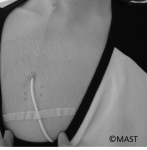 I am on
  The most prominent risk is that of sepsis, where the body responds to an infection by injuring itself, causing shock and organ failure. Sepsis is a medical emergency, the Global Sepsis Alliance talk of the ‘Golden Hour’ – Sepsis treated within the first hour has an 80% survival rate, by the sixth hour the survival rate has dropped to 30% *. Yet awareness of sepsis is low. I am already aware of instances of difficulties with communicating the seriousness of the situation, to encounter this combined with the current pressures could be disastrous.
 Medical Accessories Support Trust