


This ostomy day, to help increase awareness and understanding of living with an ostomy, Laura, a young woman with experience of both an Ileostomy and (later) a Colostomy, shares her inspirational story…
In 2009, at 29 years old, I was diagnosed with severe endometriosis after my bowel closed in four places. In December, I had to have a loop ileostomy created after a low anterior bowel section. My ileostomy was meant to be for two to three months. Seven years later, in 2016, my loop ileostomy was converted into a permanent colostomy. Most people I have spoken to, including the medical profession, struggle to understand that I have a colostomy for this reason. Most people tend to have theirs due to colitis, crohns or bowel cancer. I guess there are many people who have stomas for all sorts of reasons.
My experience with both is mainly positive. I view my surgery and my stoma as something which has saved my life. Would anyone choose to have one? Probably not but this view will be based on a stigma which still exists about ‘bags’. Although not totally problem free, my stomas have allowed me to have my life back. I am no longer worried about where the next toilet is, what I am eating and how it may affect me. The knock-on effect before my surgery was immense. I was worried about long day trips without access to a toilet, my bowels at the time of my period was almost unbearable and it affected both my social life and personal relationships as well. So, in many aspects, I could argue that having a stoma has improved the quality of my life. Yes, I have to do things a bit differently now but it’s my new ‘normal’. It is amazing how quickly things become ‘normal’.
My journey hasn’t been without its trials. The surgeries have been tough and the two major ones have been quite eventful. My body doesn’t react on the way that it should and there have been several minor and serious complications. Time is a great healer and slowly my memories of the difficult times are disappearing. I developed a recto-vaginal fistula which prevented me having my ileostomy reversed. After several surgeries to try and fix this, we decided on a final major surgery in 2016 to try and address it. However, the surgery wasn’t easy and I woke up with a permanent colostomy and you know what? I was okay with it. I have always been petrified of a reversal and the inability to control my bowels as well as the frequency of which I would have to go to the toilet. I also developed a parastomal hernia which I found upsetting as it affected my confidence. Thankfully, it has been addressed now and hopefully I won’t get another one, although I know that I am at high risk of this. I still have some issues that I deal with on a daily basis but I try to tackle things in a positive way, when I can. Again, these side effects are my new ‘normal’.
I will now have a colostomy for life. I have eight years experience of a stoma now although only a year with my colostomy so I am a relative newbie when it comes to that. Although I have learned a lot, I also have a lot still to learn. My stoma and I are well. I am fortunate enough that having a colostomy which has improved the quality of my life. I have a full-time job which is demanding but my new plumbing doesn’t affect me too much. Yes, I have had the odd leak and had to deal with this but no more than anyone who may have to dash to the toilet with a funny tummy. I do worry about some issues like pancaking and smells when I’m at work. In some ways, I can also hold off going to the toilet until I can make it.
My life is ‘normal’ or as normal as anyone’s life is! I socialise, swim and exercise. I can be self-conscious if I am in a changing room or with people I don’t know but I am gaining more and more confidence every day. Sometimes my confidence is knocked but I try and get on with it all again. At the moment, I still worry about airport security and body scanners although I have been through a few times now and staff have been sensitive and understanding. I have recently had some negative comments about using a disabled toilet. I am hoping to start commenting back on this one – not all disabilities are visible and sometimes I need to use the disabled toilet and I am entitled to. I would never be rude but I would like to have a phrase ready that gets my point across and empowers me. A comment was made to me only two weeks ago at the airport and I was surprised at how much it upset me. I won’t allow it to again though. However, on the same trip, I saw a man sunbathing on the beach with his bag on display. I find this very empowering and motivating so I am gaining in confidence every day.
Due to the nature of my job, I keep my stoma personal. I’m not embarrassed by it at all as it saved my life and is now a part of me, but I wouldn’t want my wider work community knowing. Others don’t talk about their toilet habits so why should I. This does annoy me a bit as I would like to be a part of trying to remove the stigma of having a ‘bag’. The way I see it, I have some more control over my bowel movement as well as being a survivor, for want of a better phrase. A friend has recently being diagnosed with bowel cancer and had a colostomy created. I am finding the opportunity to discuss my stoma with someone else is not only helpful for her (so she has said) but also quite cathartic. I like having a positive impact on someone else’s life and helping them with lots of tips and hints which I have gathered over the eight years. I have been trained as a visitor although never been used and I plan to approach my stoma nurse soon about offering to talk to people who are about to embark on surgery to listen to their concerns and try and show them that they can live a normal life. I know that things may change in the future and that I may have other issues to deal with in relation to my stoma, but I will address and try to overcome them when they happen.
Laura, Glasgow
For more information about Colostomy day and living with a Stoma, check out Colostomy UK – #Superstoma, and the Ileostomy Association (IA). For links about other types of stomas, check out our links page.
If you would like to define what your ostomy means to you, check out our Lived Library, click on your ostomy type and tell us your experience.
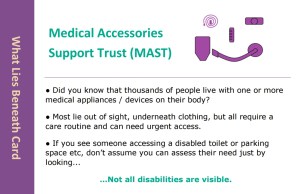 We’ve put together a double sided information card to promote awareness about the existence of hidden medical accessories, as well as basic information about the different medical appliances and devices, that people may have. Its handy business card size, means single or multiple cards can be carried around in a bag or wallet and used if and when an occasion arises. We’ve also produced an A4 poster with the same information, for places where a static sheet or leaflet would be useful. Both can be downloaded by clicking on the relevant PDF below.
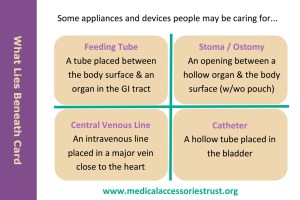 The card and leaflet are particularly aimed at those situations where those of us with hidden accessories can be negatively appraised, challenged or simply misunderstood. Using disabled facilities is a frequent context where this can occur, but there are also many other times when greater understanding and awareness would be helpful. It can be difficult in the moment to know what to say. Sometimes it is just a shake of the head and disapproving look we receive. Those with medical accessories should not have to feel they need give personal information to explain themselves, unless they want to. The recipient will not know which medical appliance / device you have. The card quietly asks others to reappraise the situation, while you go on your way. The front side of the card can also be used alone if preferred. We hope that the recipients understanding will then be carried forward to future situations.
 For some people, in addition to choosing the right medical appliances, accessorising in some way can help bring them a sense of ownership, personalisation, incorporation, reclaimation, humour, individuality, beauty, or style, (to name but a few), to their body and accessory. The links and features here explore how others have done this, including those who offer a service to make accessories for other ostomates and tubies.
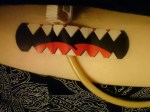 Just line it up so the pad is over the tubing and stick either side as normal. It will allow a small amount of give, so that the tubing can move with your movement.
  The plasters that work best for this are ones where the pad covers the whole of the centre of the plaster. Other than that, you can choose whatever you like, from plain colours, to patterns, characters, words and sayings.
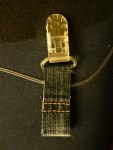 If you’re having trouble with lengths of tubing externally then a simple clasp with a piece of ribbon or material, will achieve the same effect; securing it while still allowing a little natural movement. There is no sewing involved, just cut the ribbon or material to size. Push it through the clasp, and put a piece of stick on Velcro on the ends so you can bring them together.
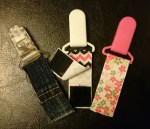 The clasp will clip to your clothing and then you can place the IV or enteral line between the material and close. It can be removed quickly and easily as necessary. Again, you can choose whatever material or ribbon that suits you.
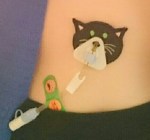
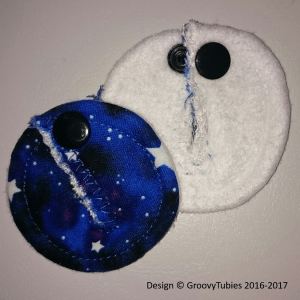 In addition to their practically purpose, they come in a huge variety of different designs, colours and even shapes. Making it another great way of personalising your stoma. Once again, you don’t need sewing skills of your own as folks in the tubie community sell them online. GroovyTubies hand-make a range of tubie pads (pictured) here in the UK. They even make glow in the dark pads! Different types of backing material are available. You can find them
  Medical Accessories Support Trust